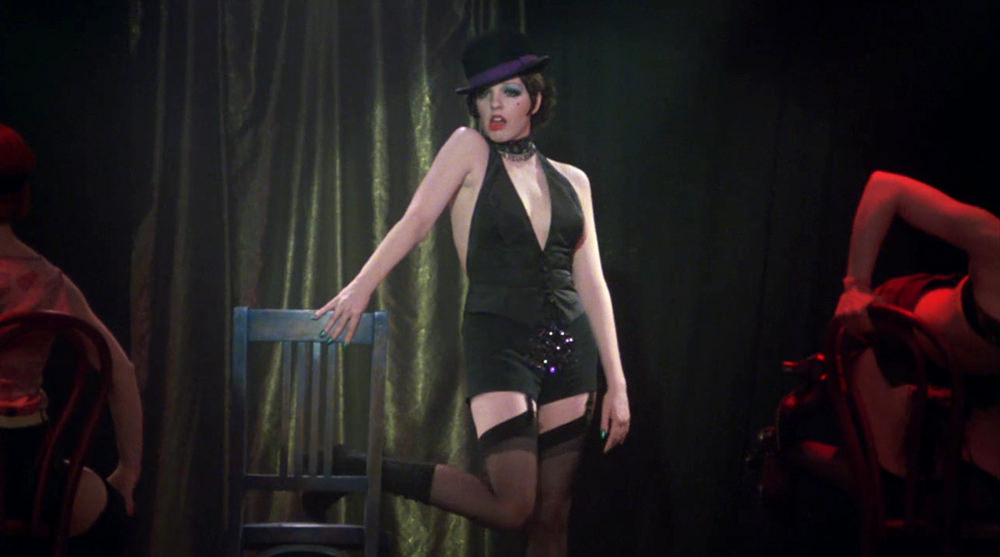
“In here, life is beautiful.“
The first and last shots of Cabaret are mirror images of mirrors. Each reflects the inside of the titular cabaret. In the first shot, we see a devious smile spread across the face of the club’s emcee as he invites us to “leave your troubles outside!” We catch a glimpse of a woman in an elegant, gold dress walking by a well-dressed man seated behind him. There is movement, joy, and liveliness in the frame. In the last shot, however, the cabaret audience appears to be frozen in time. As the camera tracks along the reflected, immobile congregation, we see several men in brownshirts scattered among the crowd. They proudly display Nazi swastikas on their sleeves.
The first shot is accompanied by playful music. The soundtrack of the final shot is a long, foreboding drumroll.
Cabaret is a cautionary tale about the danger of burying your head in the sand during the rise of a fascist state. The shots that bookend the film wordlessly encapsulate the story’s primary theme:
There can be no leaving your troubles outside when they follow you indoors.

There are many differences between the stage show and movie. In the theatrical production, the main characters are overtly poor. Their choice to indulge in hedonism feels like a coping mechanism. They exist in powerless positions in society. In the movie, Brian Roberts and Sally Bowles start out poor, but soon fall into the lap of a wealthy benefactor, and lose themselves to selfish pursuits.
Brian, in both versions, vocally stands up against the threat of the Nazi regime. But the key difference between his character in the play onstage and onscreen is best displayed during the singing of the nationalist anthem, “Tomorrow Belongs to Me.” In the theater, Brian sits somberly on the sidelines throughout the song. In the movie, the song is sung in a beer hall where Brian and his well-to-do companion share a casual drink. They don’t join the crowd’s recital, but they don’t fight back, either. They simply get in their car and drive away.
The primary Jewish characters in the stage show are impoverished and portrayed as helpless to the societal collapse happening around them. The primary Jewish characters in the film are wealthy, and positioned as aware and more than capable of fleeing Germany should they wish.
These substantial characterization changes by screenwriter Jay Presson Allen and director Bob Fosse make the movie version of Cabaret not just a direct adaption, but a companion piece to the stage musical. One is the story of powerless people indulging in distraction until the state overtakes them. The other is a more apparent tale about people who assume their privilege will protect them until it doesn’t.
Both caution against blissful ignorance and condemn fascism. But the film and stage musicals offer distinct artistic interpretations of similar themes. Seeing both gives us a clear example of how two versions of the same story can each say something unique.
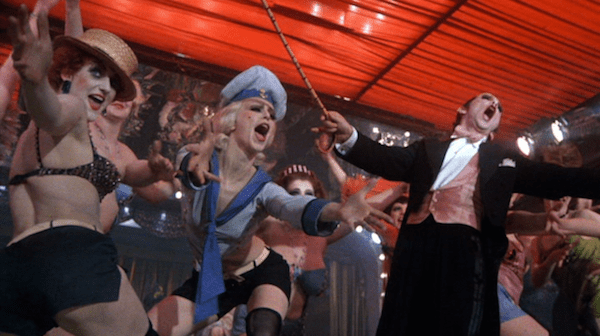
The cabaret is positioned as a place where life is beautiful, the girls are beautiful, even the orchestra is beautiful. But scenes inside the cabaret are often shot at low, slightly askew angles. At times, characters sing to completely empty rooms. The emcee and his dancers are meant to be symbols of freedom, liberty, and openness, yet they parade around in military attire during one song as if the encroachment of the Nazi party on free German society is a grand joke. In another scene, merry dancing is intercut with images of Nazis beating a man to bloody death in an alley. Other scenes set in homes and the cabaret abruptly end, as if the joke is cut off a moment too soon.
These aesthetic choices imbue scenes set at the Kit Kat Club and in civil society with feelings of uncertainty, and further reinforce the theme that hedonistic distraction can only provide unstable, fleeting comfort. While characters lean into privilege and pleasure to shut out the horrors of the world, fascists rise and fill the gaps left by their inaction and silence.
 Story / Telling