“If it was never new, and it never gets old, then it’s a folk song.”
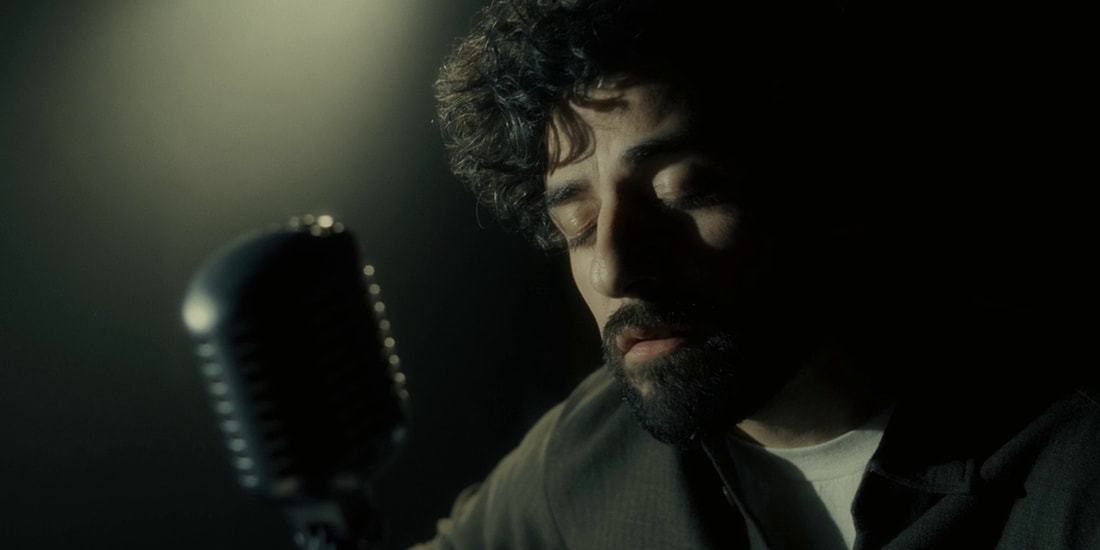
Llewyn Davis sits on a wooden chair in the middle of the intimate, otherwise empty stage of The Gaslight Café on New York’s MacDougal Street. The year is 1961, the club is in its infancy supporting folk music acts, and a bright light shines down on Davis and his guitar from above, illuminating half his face while the other half falls into darkness. The Coen Brothers linger on a close-up of that forlorn face as he begins to sing: “Hang me, oh hang me… I’ll be dead and gone. I wouldn’t mind the hangin’ — but the layin’ in the grave so long, poor boy.”
After a beat focused solely on Davis, the Coens cut away to the crowd watching him. They’re attentive, polite. One person sways in their seat. Some smoke. The Coens cut away to an insert shot of someone tapping the ash of their cigarette into a tabletop tray before cutting back to Davis. The audience doesn’t dislike him, but they’re not exactly dancing.
Throughout Inside Llewyn Davis, Davis, played by Oscar Isaac, and others sing and play their way through numerous folk songs. In between these musical numbers, we get glimpses into Davis’ personal life as he bums his way from apartment to apartment all over New York City, and in public spaces and cars to and from Chicago.
A sense of melancholy develops as we realize that, though Llewyn Davis has not yet been put in a position where he could be hung, he’s been laying in the proverbial grave for a long, long time.
Llewyn Davis is down on his luck, and he just can’t catch a break.
The plot of the film takes place during one week in the winter — that time of year when city streets are covered in disgusting slush, and you can see your breath in front of you. The Coens linger on a close-up of Davis’ snow-dampened sock while he loiters in a café in Chicago. A snowstorm temporarily blinds his view at night on the drive back home. The fact that he needs to bum around from unreliable friend’s couch to stranger’s couch just to sleep inside at night becomes even more of a dramatic problem because of the cold and snow.
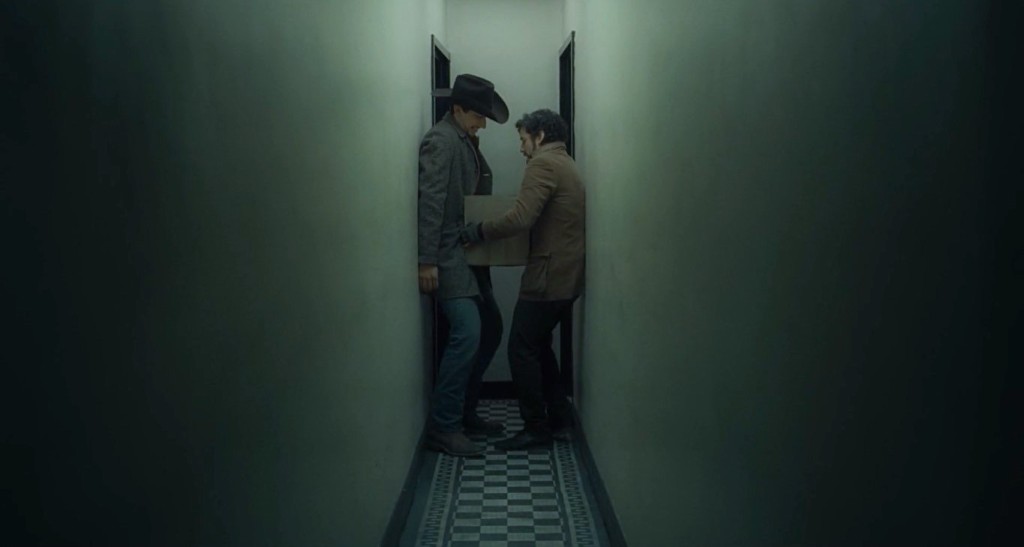
Many of those couches are in apartments, too, that are far from comfortable; several are located at the ends of corridors too small for two humans and a box to comfortably fit through side-by-side. Davis meets fellow musician Al Cody at a recording session, and asks if he has an apartment he can crash in for the night. “It’s a dump,” Cody replies. When Davis arrives at Cody’s apartment, the two of them comedically shuffle in the hall, backs against opposing walls, so that Davis can get into the apartment carrying a box of his own records that no one will buy, and Cody can leave.
Lighting falls off of characters dramatically throughout the film, shrouding faces half in darkness. Walls are almost never brightly illuminated. The color grade is muted, anddull. At times, there is a glossy look to many of the images, as if they were sad scenes from a memory.
The settings, time of year, weather, and aesthetics all work in harmony to create a somber tone.
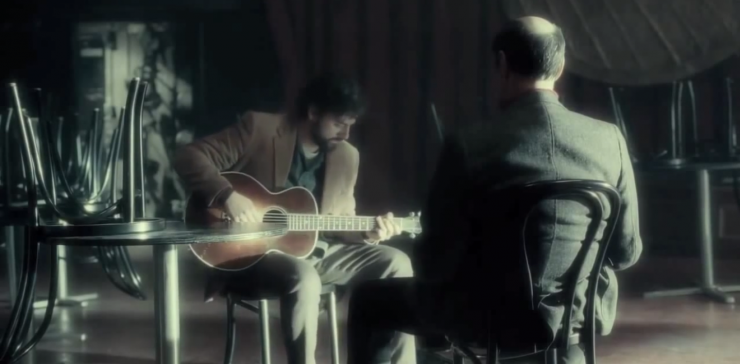
Llewyn Davis himself seems to lack that mysterious, elusive “it” factor that artists need to succeed. He’s talented, but he doesn’t connect with his audiences in the way that star players do.
There are many reasons for his lack of professional success, of course — and the Coen Brothers go to lengths throughout their story to round out his character by exploring them all. Some are tragic, and out of his control, like the suicide of his former recording partner. Others, however, are his own fault — and those character flaws are called out by Jean, his peer and occasional fling and combatant all-in-one, in an important scene.
Jean and Llewyn sit opposite one another at a table at the Caffè Reggio. “Do you ever think about the future at all?” she spits at him. He sarcastically replies: “You mean like, flying cars? Hotels on the moon? Tang?” He then calls her careerist, square, and sad for using music as a way to get a home in the suburbs to raise kids, instead of making music for the sake of art.
“I’m sad? You’re the one who’s not getting anywhere,” she retorts. “Me and Jim try. We try! You sleep on the couch.”
Llewyn’s pride causes him turn his nose up at any music that feels frivolous or “popular,” and makes him reject an offer to perform under contract as part of a touring group instead of as a solo artist. The Coens establish Llewyn’s pride in his actions throughout the film’s first act and in several conversations with Jean, then use it as motivation for Llewyn to turn down the one offer that he gets that could have bettered his circumstances.
Davis’ lack of strategic planning leads to other major long-term missteps in exchange for short-term gain, too. In one comedic scene, Davis records a song in a studio with his friend Jim and Al Cody. The trio plays a catchy and amusing — albeit inane — song written by Jim called “Please Mister Kennedy,” about a man begging JFK not to shoot him off into outer space. Davis gets paid $200 as a session fee. But because he doesn’t have representation and doesn’t want to wait for the money until he does, he signs away any right to royalties in exchange for the cash up front. Later in the film, his well-educated, upper-middle-class Upper West Side friends mention that they heard the track; they remark that it’s sure to become a hit — and that Davis is bound to get rich off of the royalties from it.
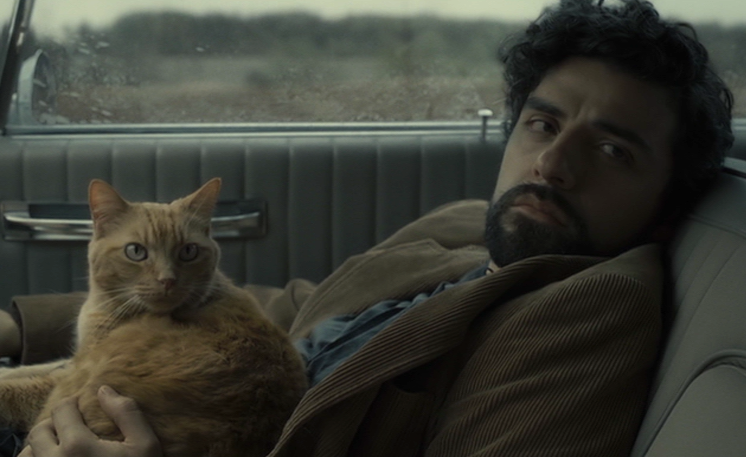
Davis only wants to succeed if he can doesn’t have to sacrifice any of his purported integrity. Stubbornness is a tricky characteristic — it would be easy to lose our sympathy for him if he turned down opportunities and was lazy, or didn’t try. But try he does. Fifteen minutes of the film’s runtime are dedicated to a bizarre, meandering odyssey during which Llewyn hitches a ride with two intimidating men all so that he can audition in Chicago for a long shot at representation and a recording contract. He spends what little money he has on food and gas, gets verbally harassed and threatened by his unsavory companions, watches a man nearly die of a drug overdose in a public restroom, abandons a cat that he swore he’d take care of, and trudges through sleet and slush… only to play a heartfelt tune for less than two minutes, and get the following clipped response from the man he auditions for:
“I don’t see a lot of money here.”
At the end of the film, Llewyn Davis performs a soulful tune called “Fare Thee Well” at The Gaslight Café. As soon Davis walks off the stage, a young Bob Dylan sits down in his place and proceeds to strum his own guitar and sing a song called “Farewell.”
It sounds ironically, depressingly similar to Llewyn’s own ballad.
“Oh, it’s fare thee well, my darlin’ true…”
The film’s great punchline is that we know how successful Bob Dylan will become, and can posit how unsuccessful Llewyn Davis will remain. That Davis then gets physically assaulted — literally beaten down — is merely a button at the end of the dark joke.
While the film’s outlook is bleak — Davis will almost assuredly never achieve commercial success — and the themes about being a struggling artist ring painfully true, the sentiments imparted by Inside Llewyn Davis aren’t all dark and cynical.
After all of his beatings and rejection, Llewyn continues to play his heart out. He may never achieve the artistic success that he longs for, but those lingering close-ups on his face while he sings in small clubs reveal his truth: strumming melancholic chords, singing folksy ballads, Llewyn Davis, for a few moments, finds peace and meaning in his art.
 Story / Telling