“This is the city of illusions.”
Fellini’s Roma is a movie about the dualities — history and modernity, religious virtue and vice, culture and chaos — that constitute the city of Rome.
The film is mostly plotless, but its scenes are fascinating in spite of this, because of the cleverness by which Fellini exposes and explores these dichotomies. Together, Roma‘s disconnected sequences paint an abstract portrait of a city that is both ancient and modern, holy and depraved, cultured and undignified.
Fellini sets the opening of Roma in the 1930s, during the height of fascist rule and World War II. In these scenes, Fellini references the history of Rome in order to make a statement about the Italy of the film’s present day.
In the middle of a snowstorm, a homeless man smokes a cigarette next to an armless and half-headless statue of Julius Caesar. “This fascist shit, his head is split,” the man says while puffing smoke at the statue. He then breaks into laughter, looks directly into the camera, and says, “now we’ve got another meanie by the name of Mussolini.” Fellini cuts from a close-up of the Caesar statue’s split head to a theatrical performance of Shakespeare’s Julius Caesar… specifically, the scene in which the titular character is assassinated.
Knowing what we know now — and what Fellini knew in 1972 — about Mussolini and his fate, we can posit that this scene establishes that the past and present of Roman society are intrinsically linked, and that we — and our public servants — are doomed to repeat the same mistakes of the past unless we intentionally pivot in a better direction.
Not all of the scenes that focus on clashes between history and modernity are political. Many are much more visceral and emotive.
The final sequence of Roma, for example, is a surreal, wordless montage that takes place in the heart of Rome at night, as a raucous gang of vespa riders races around the city. The camera frenetically tracks the motorized scooters through the streets as Fellini cuts between them and point-of-view shots of the ruins that they pass by. These modern machines weave through — and ultimately leave behind — all of the iconic vestiges of the city’s past before Fellini cuts to black.
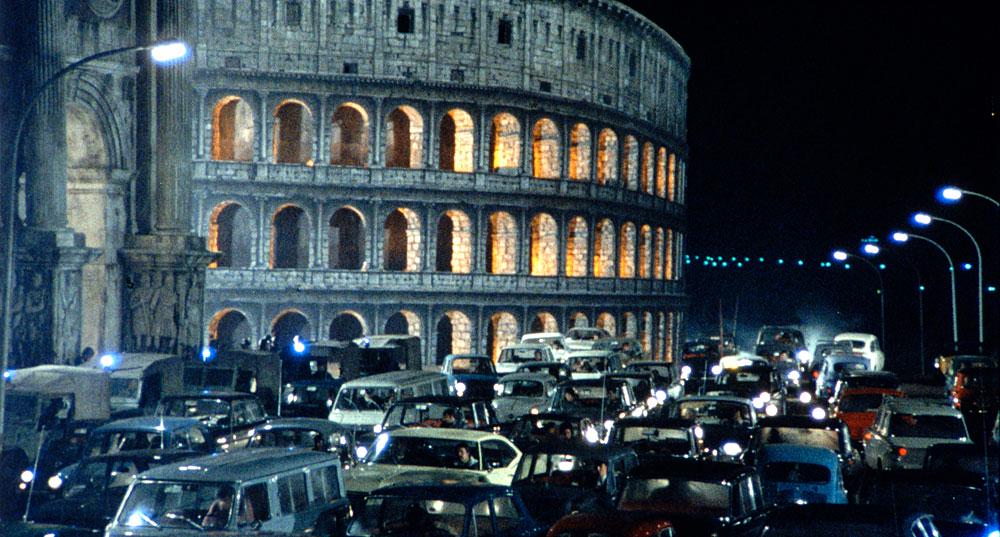
Another captivating, visceral sequence about modernity and history intertwining also involves vehicles, and takes place on the Grande Raccordo Anulare, the circular highway surrounding Rome. That scene starts off innocuously enough, with a wide shot of cars driving through toll gates in the middle of the day. But Fellini rapidly devolves the scene into a chaotic montage. Rain pours down from the sky. Fires burn on the side of the road. A white horse trots between lanes of traffic. Men yell at each other out of their car windows. Hippies and prostitutes stare into the camera from small hills on the side of the highway. Fellini places himself — and a film crew — on a crane in the middle of the traffic, and films himself and his team filming all of this surreally staged chaos. Military tanks, hitchhikers, smokestacks, a dead cow, and barking dogs are among the many things that Fellini’s camera captures before he ends the sequence with a wide shot of gridlocked traffic, and a slow zoom into the looming Colosseum behind it, while horns honk loudly and angrily on the soundtrack.
The film’s best sequence places modernity at direct odds with history. We follow the adventures of a surveying crew as they ride trolleys down work-in-progress subway tracks while venting about how difficult it is to construct an underground mass transit system with all of the loose soil below Rome and all of the bureaucracy above it. As their trolley rolls through the tunnels, Fellini tracks his camera past an underground ruin. “We had to change course,” the foreman tells his guests, because of this “necropolis with 400 skeletons.”
Later, Fellini pans across their underground work zone, which is full of intense machinery, men with shovels, and industrial tubes; the shot feels like it was plucked straight out of a science fiction movie. “Sir, I think we’ve run into another hollow chamber,” a construction worker tells his boss in one of the side tunnels of this project.
“We have to suspend work again,” they learn, because of the archaeological treasures that could be on the other side of that hollow wall.
The workers choose to break through the wall to see what is on the other side. As they do so, Fellini intercuts shots of a whirring, foreboding drilling machine scraping against the wall with montages of the well-preserved ancient frescoes and ruins behind it. Mechanical hums dominate the soundtrack.
When the drill breaks through the wall, the hums are replaced by the sounds of rushing wind. The workers admire the beautiful, ancient paintings within the ruins of an old Roman House… until, suddenly, a foggy gloss begins to form over them. The sudden rush of oxygen rapidly discolors and destroys the ancient art. The workers are dismayed.
The new breaks the old.
As we move forward into the future, Fellini seems to say, we will invariably end up erasing the past.
Fellini spends much of Roma‘s runtime focusing on Rome’s people and their pasttimes, too — not just its modern advancements and historical relics. He compares luxury brothels with their working-class equivalents, and lingers outside of a restaurant for an extended period of time while families enjoy their dinners, then cuts to a shot of the same restaurant later in the night so that we can watch the stray Roman dogs eat the families’ leftover table scraps.
As he crafts vignettes about the Roman people, Fellini focuses on the conflict between opposing ideals in their lives.
Early in the film, a priest displays a slideshow of images of iconic Roman sites in front of a room full of bored schoolchildren. Much to his dismay, a scandalous photo of a scantily clad woman slips into the show, shattering his pious mystique. The priests are horrified; the boys are delighted.
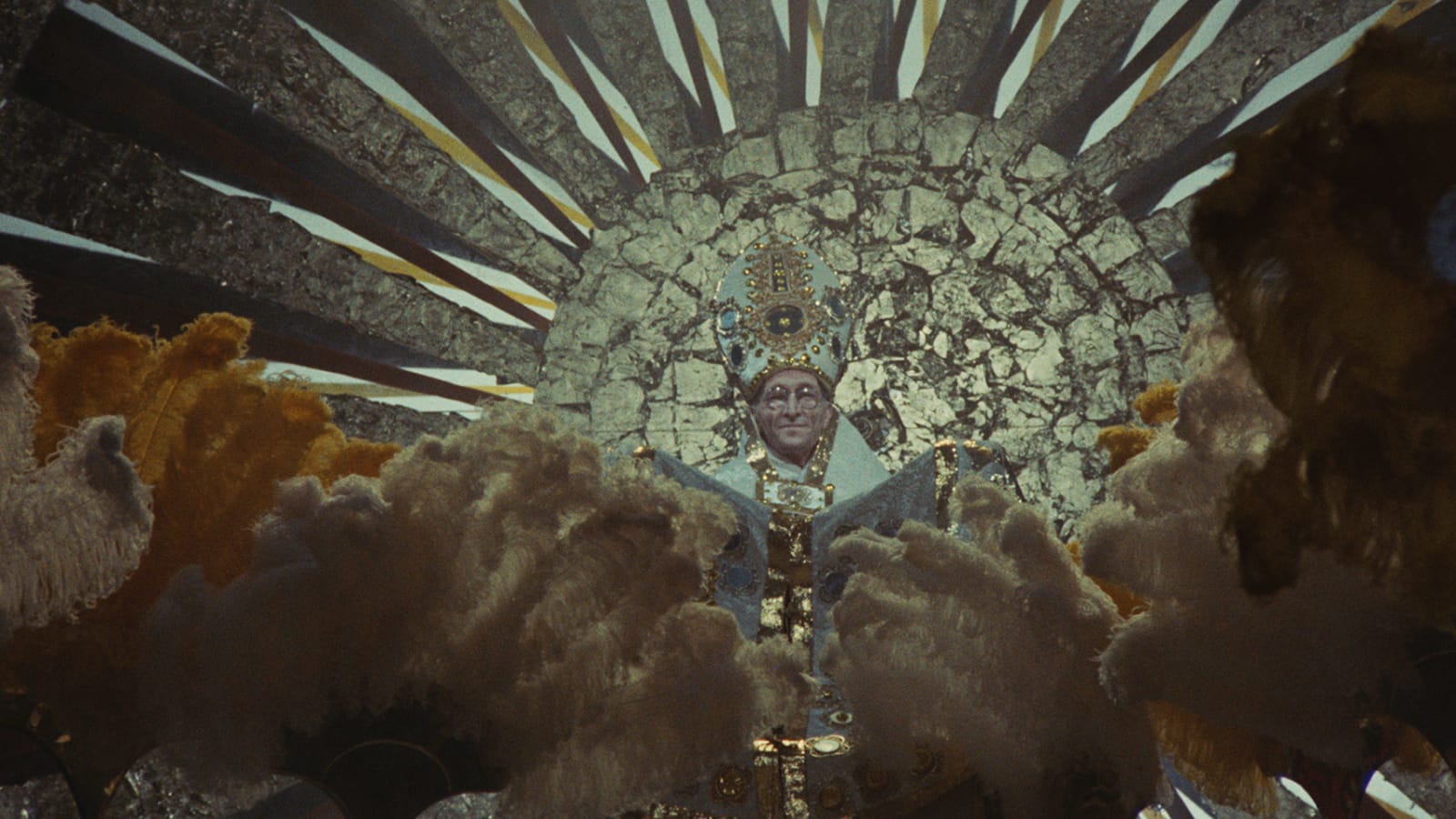
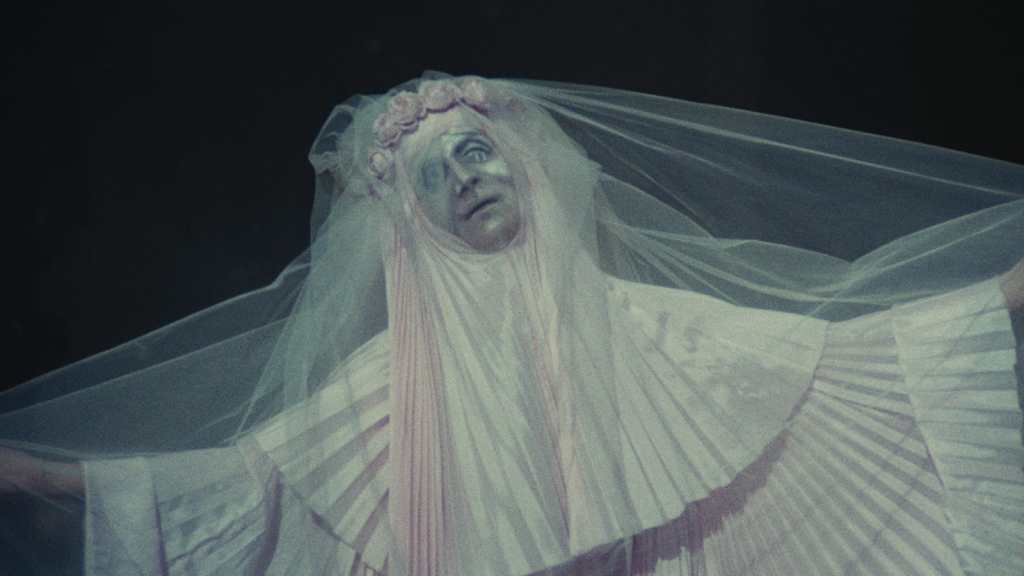
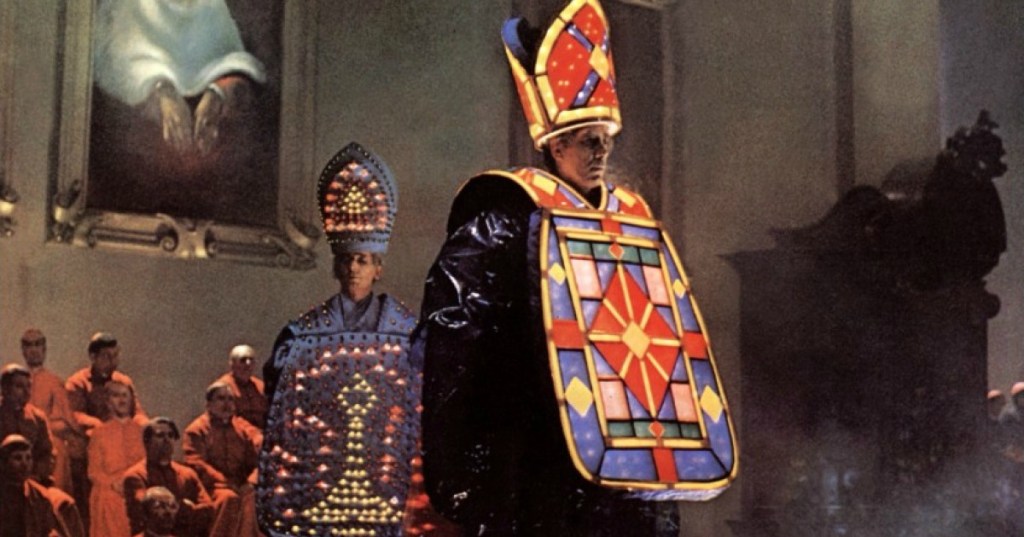
This kind of clash between virtue (specifically, religious virtue) and vice in Rome is most creatively and hilariously explored in the film’s boldest sequence: a fashion show hosted by a socialite in honor of a Cardinal, in which Nuns, Priests, and Cardinals — as well as a sit-in for the Pope — show off increasingly gaudy, extravagant costumes in a decidedly materialistic procession.
Smoke rises from below the stage and an organist plays in the center of the room as the religious models show off their swanky wardrobes to their fellow devotees. A droll, serious man narrates the show: “on to sportier models,” he says as two Cardinals jaunt out on rollerblades.
The parody escalates; eventually, what can only be described as a disco ball in the shape and form of a Bishop rolls down the runway.
All the while, Fellini integrates himself into the story to give his experimental musings some semblance of structure. In one scene, a collegiate scholar asks the character of Federico Fellini about the movie that he is making about Rome: “Will your film show Rome from an objective point of view, and its eternally unresolved problems?” “Don’t show us the same old colorful, easygoing, slovenly, maternal Rome,” a young woman adds.
Fellini smiles; “I have to be true to my own nature,” he replies. He then overhears his camera operator talking about framing up a shot of a variety theatre. “That’s the kind of thing I’d like to show,” Fellini says in voiceover narration. “A variety show at the Barafonda Theater.”
We hear a cymbal crash, and Fellini cuts to a close-up of a man in a red polka-dotted jumpsuit covering his gaudily made-up face with his dirty hands.
We then watch for quite some time as a series of vaudeville artists perform their acts, and a group of men heckle them. Fellini ends the show with art imitating life; a military-themed cabaret performance is interrupted by air raid sirens as Rome is bombed by its enemies during World War II.
Culture is appreciated, then disrupted, by both micro and macro chaos — men and war.
Fellini is the observer of it all. He is ever present, either in front of or behind the camera. His interest is Roma in these kinds of dualities, and the conflict that they create.
Even when his scenes drift into whimsy, they are always grounded by the dramatic structure and tension implicit in these dichotomies. Therefore, though the plot meanders, the message is always clear… and because the plot meanders, its delivery is fascinating.
 Story / Telling