A lone cabin. A lone man.
The Gold Rush is part action-adventure film, part comedy, and part romance. It opens with stunning wide shots of seemingly endless single-file lines of men marching up snow-covered mountains in pursuit of gold. Later, there is a ruthless villain — an outlaw who holds up our hero with a rifle, gets caught in a shoot-out with law enforcement officers in the middle of a blizzard, and then later meets his comeuppance in an avalanche of rock and snow.
Scenes of romance come midway through, as Charlie Chaplin’s Tramp — here billed as “The Lone Prospector — becomes infatuated with a beautiful woman named Georgia, whom he meets at the Monte Carlo Dance Hall in a mining town. He overhears her saying that she needs a man worth her while. Then, a man named Jack keeps harassing her, so she initiates a dance with the Tramp. “You see, I’m very particular of who I dance with,” she taunts.
The Tramp is instantly smitten. He keeps a photograph of her underneath his pillow, and he invites her and her girlfriends over for a New Year’s Eve dinner that they ultimately never show up for. In preparation for that dinner, he decorates a modest cabin, cuts a meticulous snowflake pattern out of a newspaper to create a placemat for the table, and shovels snow away from nearby businesses so that he can earn enough money for the meal. On New Year’s Eve, he daydreams of what the evening could be like with them at his table; in this vision, he amuses them with a puppetry dance featuring dinner rolls on forks, which behave in Chaplin’s deft hands as if they were legs and feet.
Interspersed throughout the action and romance are scenes of comedy. In The Gold Rush, many of those scenes involve animals. We first meet The Lone Prospector as he saunters along a dramatic cliff path; unbeknownst to him, a black bear trails him through the snow. That bear later barges into the cabin that the Prospector is seeking shelter in in the middle of a snow storm, and becomes dinner for The Lone Prospector and fellow trapped prospector Big Jim McKay.
Before the bear arrives to inadvertently save the day, however, The Lone Prospector and Big Jim slowly starve. In an attempt to satiate his hunger, the Prospector eats a wax candle with a healthy pour of salt. Meanwhile, he protects the outlaw Black Larsen’s pet dog from Big Jim’s hunger — that the Prospector would rather eat a candle than the dog is a great, subtle bit of character development.
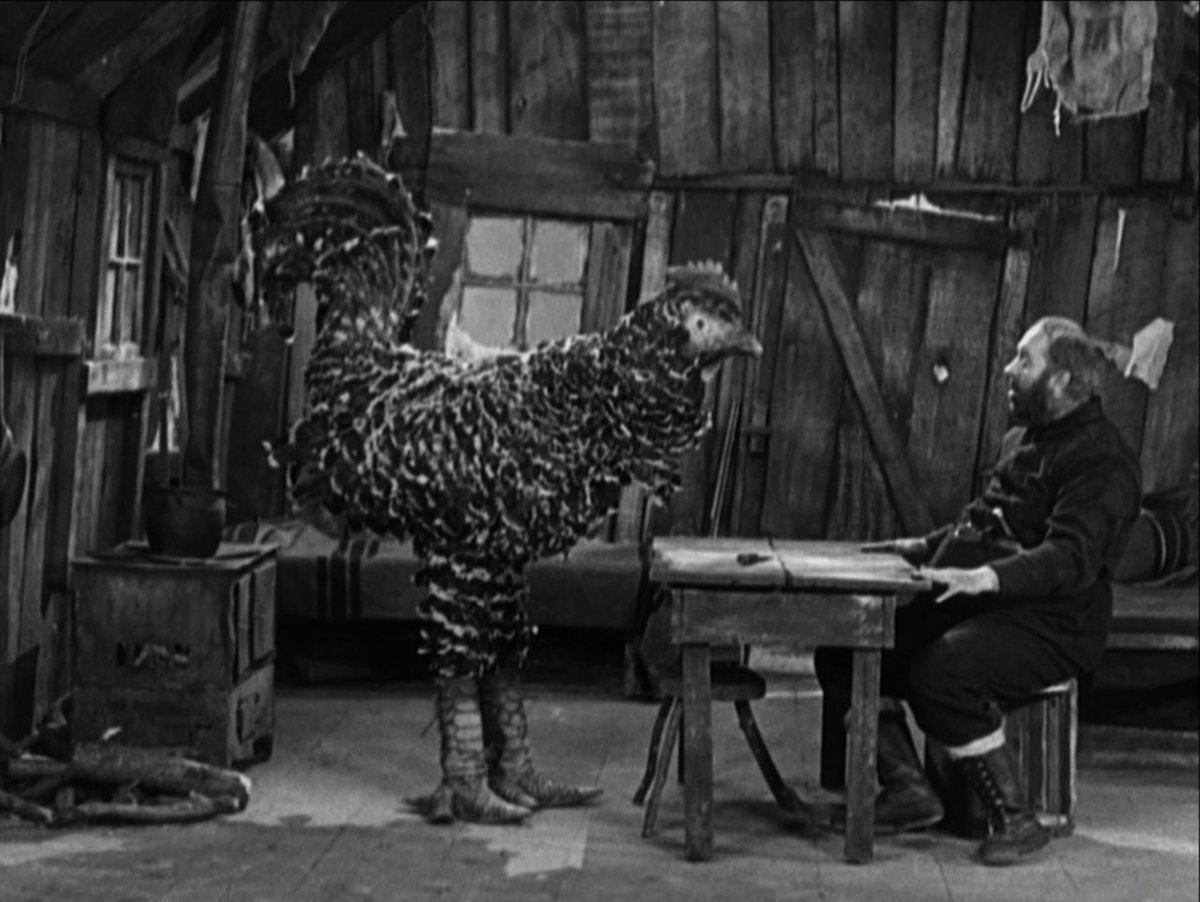
Once the dog and Black Larsen leave the cabin to find food elsewhere, however, the Lone Prospector is left with no choice but to boil his own boot for him and Big Jim to eat. He tries to give Big Jim the sole first, but Big Jim wants the upper leather. They split the shoelaces and eat them as if they were pasta. Jim starts to hallucinate from his hunger pangs — he envisions Chaplin’s character as a massive chicken, and breaks out a rifle to try to shoot him down. A comedic chase ensues.
What makes The Gold Rush feel cohesive in spite of the differing tones of the adventure, romance, and comedy is that those conflicting genres are all natural qualities of The Tramp — he constantly seeks out new experiences, he’s infatuated with any beautiful woman who gives him attention (to the point of naïveté), and he’s naturally funny. The Tramp is all of these conflicting tones in one endearing character. It makes sense that his story would be comprised of all of the qualities that make him unique.
This version of The Tramp — The Lone Prospector — is not much of a prospector, but the “Lone” moniker is most apt. He’s an outsider — an isolated character in a mostly desolate environment. By the end of the film, he eventually finds riches and human connection… but for the majority of The Gold Rush, he’s on his own. He spends much of his time in cabins fending for himself, and even after he makes his way to the mining town, several scenes show him peering into through windows, watching others from afar. It’s like he’s experiencing all of the excitement of the Alaskan gold rush vicariously, from the outside looking in.
When he first enters the Monte Carlo Dance Hall, we see him in a wide shot from behind. Everyone else in the hall rushes on to the dance floor or up to the bar all at once, leaving The Lone Prospector isolated in the frame.

In the end, The Lone Prospector strikes gold with Big Jim, and he embarks on a new voyage, isolated no more. Money doesn’t change him too much, thankfully; he still picks up a discarded cigar from the ground and puffs it in his mouth without thinking that it’d be better to smoke a fresh one.
All of the scenes of him being detached from others — and yet still optimistic, helpful, and resourceful — makes the film’s final scenes feel rewarding; it’s nice to see The Lone Prospector getting some recognition after all that he has endured.
And it’s nice, too, to see how far Georgia comes. It isn’t explained particularly well how they end up on the same boat in the end. But to compare how cruelly she treats the Tramp in the Monte Carlo with how she treats him on the boat — especially before she knows that he is now a multi-millionaire — shows considerable, admirable personal growth.
The Gold Rush may not be Chaplin’s funniest or most dramatically rewarding film (City Lights might be both), but it is his most visually stunning. The settings are gorgeous — the majesty of the snow-covered mountains and the rustic log-cabin interiors set beautiful foundations for some of the most aesthetically memorable scenes in silent cinema. And just like The Tramp, the film is full of adventure, romance, and plenty of comedy.
 Story / Telling